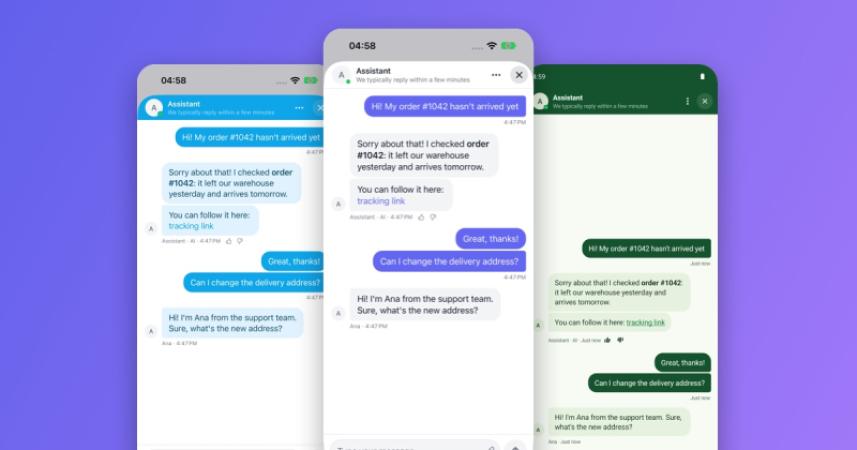
What an AI Chatbot Needs to Know About Your Shopify Store to Actually Help
"Training" an AI on your catalog isn't enough. To resolve real customer queries, it needs access to data that changes constantly. Here's what that data looks like.
Helpium · Blog
Browse every article on the Helpium blog: trends, guides and updates on AI-powered customer support.
"Training" an AI on your catalog isn't enough. To resolve real customer queries, it needs access to data that changes constantly. Here's what that data looks like.
It's not just a bad experience. Every hour a customer waits for a support reply is an hour they might change their mind, ask for a refund, or buy from someone else.
Many ecommerce support tools charge per resolved conversation. Here's why that model gets more expensive right when your store sells the most.
We compare the two most common pricing models in ecommerce support based on the criteria that actually matter to a Shopify store: seasonality, variable volume, and predictability.
Turning on an AI chatbot is easy. Knowing whether it's adding value or quietly creating problems is another matter. The answer is in your dashboard—if you know what to look at.
Most support platforms charge per agent. It seems fair: you pay for what you use. But that model has a side effect that almost no one talks about: it turns every new hire into a financial decision, and that ends up limiting how your team grows.
Your team doesn't lose time answering customers. It loses time figuring out where the conversation is, which channel it came in on and what was said before. A unified inbox removes that invisible cost.
An AI chatbot is never smarter than the content it learns from. If your knowledge base is incomplete or poorly written, it doesn't matter what model sits behind it: the answers will be just as imprecise.
Implementing a chatbot too late carries a high cost. The key is identifying the right moment and the conditions that determine it.
Support is not a cost center. It is one of the few touchpoints where the customer evaluates whether staying is worth it.
Scaling support doesn't mean hiring more people. It means designing an operation that grows without costs growing at the same rate.
Identifying the repetitive core of your operation is the first step to scaling it efficiently.